Worker guide
Working at Heights: cost, 3-year renewal and fall protection rules
Updated October 31, 2026
In Ontario, construction workers who use fall protection must take a working at heights program from a provider approved by the labour ministry's Chief Prevention Officer. The training is valid for 3 years, and a refresher renews it for 3 more years. The course has two modules: Basic Theory, at least 3 hours, and Practical, at least 3.5 hours.
What is Working at Heights training?
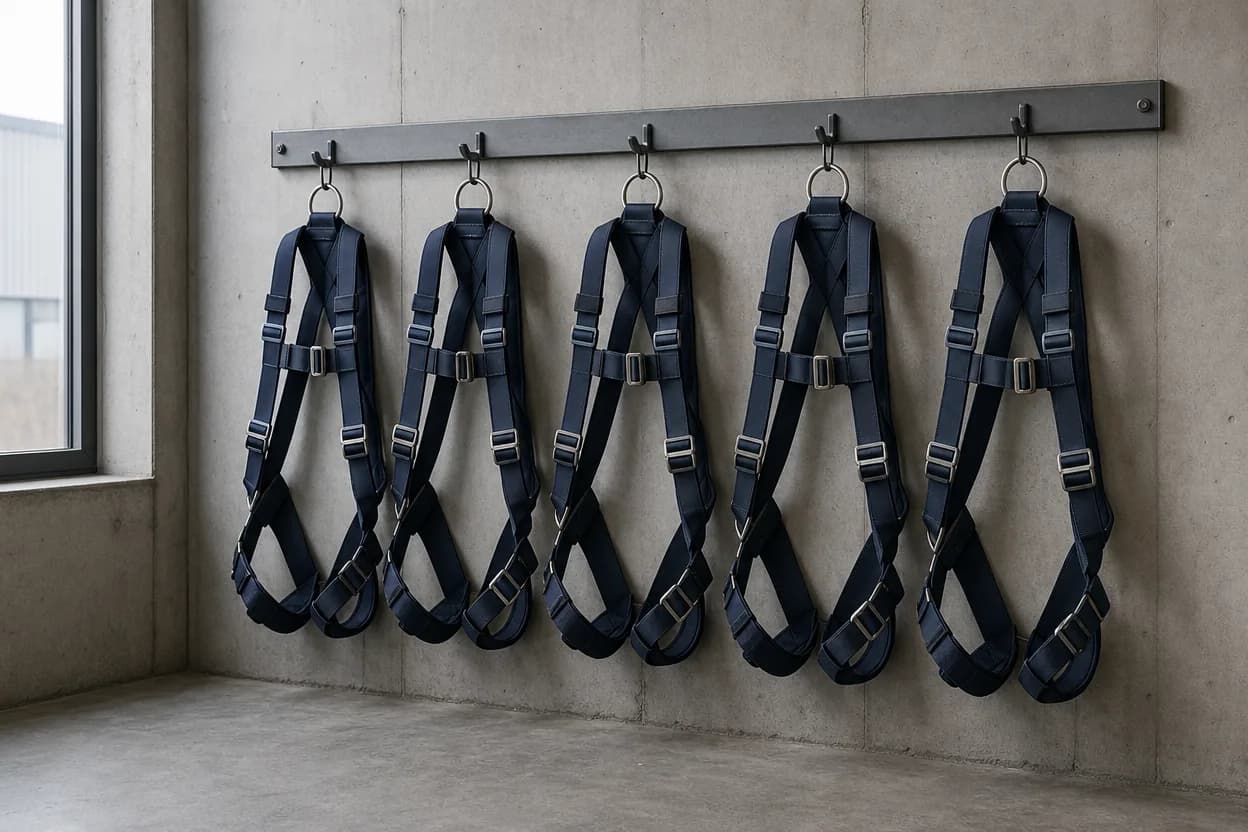
Working at Heights is the training Ontario requires before a construction worker uses fall protection. It has two modules: Basic Theory, at least 3 hours, and Practical, at least 3.5 hours. You must pass a written test with at least 75%. You must also show four practical skills, such as calculating fall clearance and putting on a harness, and each one must be performed satisfactorily and documented. A class has at most 12 learners for each instructor, and the provider must have 1 set of equipment for every 3 learners. The course does not replace training on the equipment you use at your site. Your employer must give you that training too, and IHSA says the employer must also train you on the hazards at your site.
Who needs it in Ontario?
- You need it on a construction project if you must use a travel restraint system, fall restricting system, fall arrest system, safety net, work belt or safety belt[1]
- If your workplace is not covered by Ontario's construction regulation, O. Reg. 213/91, you do not need approved working at heights training. Workers directly employed by an automobile manufacturer or assembler have a limited exemption[1]
- Workers do not need another program when changing employers if their training is still valid[1]
How much does Working at Heights cost?
| Provider and province | Full course | Length | Renewal |
|---|---|---|---|
| Newfoundland and Labrador Construction Safety Association (NLCSA), which says WorkplaceNL approved the course[5] | $500 plus HST; members $210[5] | 2 days (16 hours)[5] | NLCSA: recertification every 3 years[5] |
| Construction Safety Nova Scotia[6] | $200 plus HST; members $100[6] | 1 day[6] | Certificate expires after 3 years[6] |
| New Brunswick Construction Safety Association (NBCSA)[7] | No price listed | 1 day[7] | Refresher: half a day online, before the original course expires[7] |
| Infrastructure Health and Safety Association (IHSA), Ontario (says the Chief Prevention Officer approved it)[4] | $312.20; members $156.10[4] | 1 day[4] | Refresher: $240.80 (members $120.40), half a day[8] |
| Worksite Safety, Mississauga, Ontario (says the Chief Prevention Officer approved it)[9] | $149[9] | 8 hours[9] | Refresher: $95, 4 hours[10] |
| Saskatchewan Construction Safety Association (SCSA)[11] | $300; members $50[11] | 1 day (8 hours)[11] | SCSA certificate: 3-year expiry; renew with SCSA's On Demand recertification or the 1-day course, which is required every six years[11] |
| Certified Safety Training, Calgary, Alberta[12] | $149 in person; $139 blended[12] | 6.5 hours in person; blended: online learning and exam plus 2 hours in person[12] | Recertification: $139 (online exam, plus 2 hours in person)[12] |
Prices are per person, as each provider listed them on October 30, 2026. At the two Ontario providers, a full course cost $149 to $312.20 and a refresher $95 to $240.80. Outside Ontario, non-member prices were $139 to $500, and courses took 6.5 hours to 2 days. These are examples, not a full list, and the ministry's Marketplace lists approved Ontario providers. The NLCSA and Construction Safety Nova Scotia add HST, and the other providers do not say whether their price includes tax. Member prices are for members of that provider, so ask whether your employer is a member. Construction Safety Nova Scotia, the NBCSA and the SCSA ask you to have a harness for the course.
For a crew, IHSA runs the course at your site for up to 12 people for $2,910, or $2,060 for members. Its refresher at your site costs $2,181, or $1,455 for members.
How long is Working at Heights valid?
In Ontario, your training is valid for 3 years from the day you pass. After 3 years, you need a refresher to keep it valid. The refresher is the Practical module again. It keeps your training valid for 3 years from the day you pass the refresher. You can take it if you passed both modules of an approved program, and Ontario has an eligibility checker tool. If your 3 years have already ended, you can still take a refresher instead of the full course. Worksite Safety's refresher is for a certificate that has expired or is expiring soon. Until you pass the refresher, your training is not valid. Your training stays valid when you change employers.
Can you take Working at Heights online?
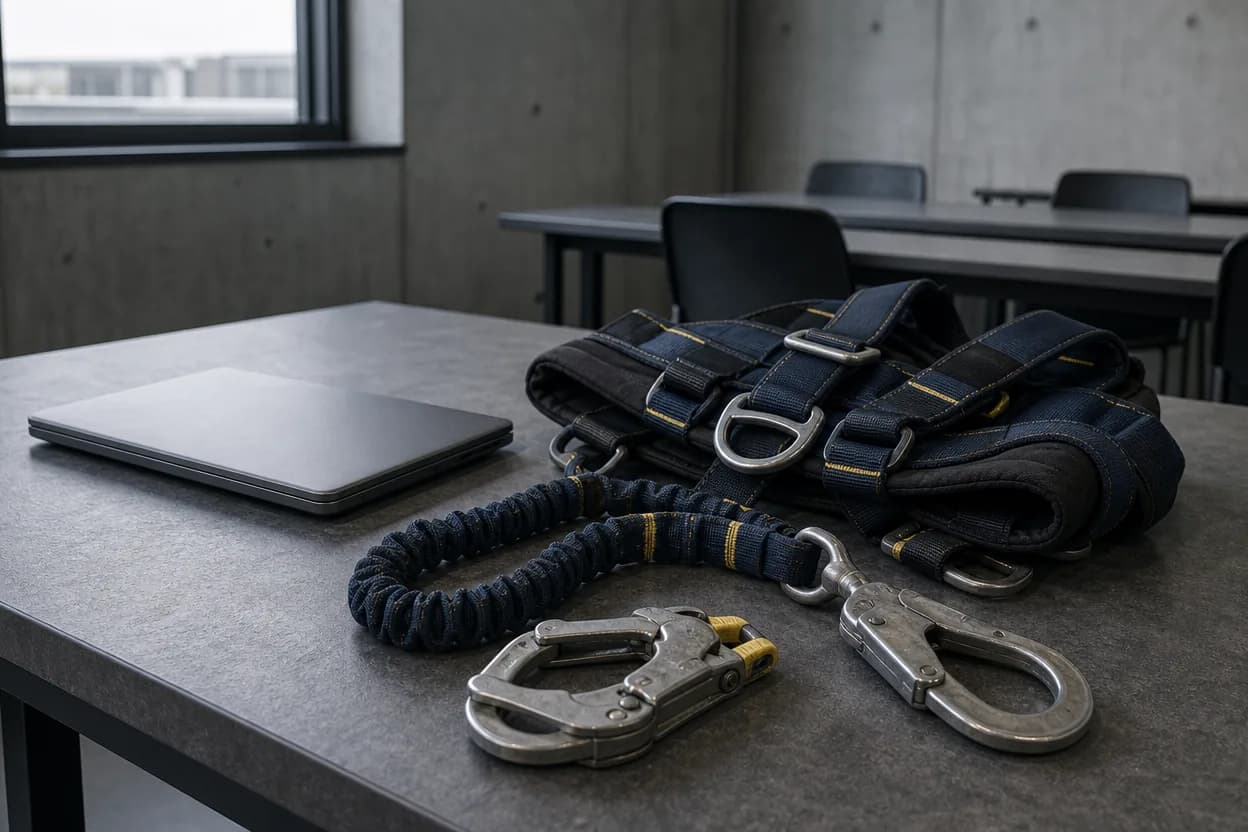
Only part of it. In Ontario, you can take the Basic Theory module by eLearning if a qualified instructor interacts with you, or by live video. The Practical module is always in person. In Saskatchewan, the SCSA lists Zoom and a computer with a camera and microphone as online requirements, and you need a harness for the practical part. In Alberta, a Calgary provider lists a blended fall protection course: online learning and an exam, plus 2 hours in person.
Fall protection training rules by province and territory
| Training rule | Renewal |
|---|---|
| Newfoundland and Labrador: you must complete a prescribed fall protection training program before you use fall protection equipment; WorkplaceNL issues the certificate[13][1] | NLCSA: recertification every 3 years[5] |
| Prince Edward Island: workers must be competent and trained by a competent person to use fall protection[14] | No renewal period in the sections cited |
| Nova Scotia: you must pass fall protection training, taught by a competent person, before you use fall protection[15] | At least every 3 years[15] |
| New Brunswick: a competent person must train you in the use, maintenance and inspection of the fall protection system and prepare a written training record[16] | Employer reviews it every year to decide on retraining[16] |
| Québec: the Code's fall rescue rules require a course on the rescue procedure for the workers who will carry it out, before harness or safety net work starts[17] | Rescue drills: before the work starts, then every 6 months while it lasts[17] |
| Ontario: approved working at heights training before you use fall protection on a construction project[1] | The training is valid for 3 years, and a refresher renews it for 3 more years[1] |
| Manitoba: a competent person must train you in the use, care and inspection of the fall protection system you use[18] | No renewal period in the sections cited |
| Saskatchewan: the SCSA says its one-day course for workers who must use fall protection meets provincial legislative standards[11] | SCSA certificate: 3-year expiry; renew with SCSA's On Demand recertification or the 1-day course, which is required every six years[11] |
| Alberta: your employer must train you in the safe use of the fall protection system before you work where one must be used[19] | No renewal period in the sections cited |
| British Columbia: before you enter an area with a risk of falling, your employer must instruct you in its fall protection system and procedures[20] | No renewal period in the sections cited |
| Yukon: fall arrest protection must come with appropriate training[21] | No renewal period in the sections cited |
| Northwest Territories and Nunavut: you must be trained in the fall protection plan and the safe use of the system before you work where one is used[22] | No renewal period in the sections cited |
Every province and territory sets its own fall protection training rule. In most of them, your employer must make sure you are trained before you use fall protection. In Québec, the rescue rules apply to work with a fall arrest harness or a safety net. A worker who falls and hangs in a harness or lands in a net must be rescued within 15 minutes. Alberta's rule lists what the training must cover, including hands-on practice with the equipment and emergency procedures.
When do you need fall protection?
In most provinces and territories, you need fall protection where you could fall 3 m or more. In Ontario, the main height is a fall of more than 3 m. Most rules also cover a lower fall if the landing could make the injury worse. Some cover any fall into operating machinery, water or a hazardous substance.
Lower falls that also need fall protection
- Newfoundland and Labrador: at any height above a surface that could injure you, or above an open tank, pit or vat of hazardous material[13]
- Nova Scotia: a lower fall onto a surface that could cause a worse injury, or into exposed hazardous material[15]
- New Brunswick: at any height above a surface that could injure you, or above an open top tank, bin, hopper or vat[16]
- Québec: guardrails from 1.2 m where vehicles are used and 1.5 m where loads are handled, and at any height above a dangerous liquid or substance, moving parts, or dangerous equipment or material[17]
- Ontario: more than 1.2 m from a wheelbarrow path, or any fall into operating machinery, water or another liquid, onto a hazardous substance or object, or through an opening[3]
- Manitoba: a riskier lower fall, any fall into operating machinery, water or a hazardous substance or object, or through an opening, or more than 1.2 m from a wheelbarrow path[18]
- Alberta: more than 1.2 m at a permanent work area, a lower fall if the injury may be worse than landing on a solid, flat surface, or any fall onto a hazardous substance or object or through an opening[19]
- British Columbia: a lower fall riskier than landing on a flat surface[20]
- Yukon: a riskier lower fall; a fall into a pit, shaft, machinery, water or shifting bulk material; and work on poles, towers, single point suspension equipment, swing stages, elevating work platforms, baskets or suspended platforms, and steep or slippery roofs[21]
- Northwest Territories and Nunavut: a lower fall with a risk of injury, and guardrails from 1.2 m at a permanent work site[22]
Does Ontario accept fall protection tickets from other provinces?
Only from Newfoundland and Labrador. Ontario accepts two kinds of training: its own working at heights program and fall protection training approved by WorkplaceNL. As proof, you show your employer the WorkplaceNL Fall Protection certificate, and Ontario accepts no other document or card for this. You also need Ontario's basic health and safety awareness training and training on the fall protection systems at your site. A fall protection ticket from any other province or territory is not one of the two accepted kinds. Going the other way, most other provinces and territories make your employer responsible for your training. Before you pay for a new course there, ask the employer whether it accepts your Ontario training.
Is Working at Heights training worth it?
On an Ontario construction project, it is not optional. You cannot use fall protection there until you pass an approved program. At IHSA and Worksite Safety, a refresher costs less than a full course and takes less time. In most other provinces and territories, the rule says your employer must make sure you are trained. Training from the associations in Newfoundland and Labrador, Nova Scotia and Saskatchewan needs renewal after 3 years.
Mistakes to avoid
Avoid these mistakes:
- Booking a provider that the Chief Prevention Officer has not approved. Ontario warns of fraudulent providers who may take fees and issue cards without valid training. Find an approved provider on the ministry's Marketplace.
- Taking only an online awareness course. In Ontario, the Practical module is never online. Workplace Safety & Prevention Services (WSPS) says its online introduction may not meet the training requirements in all jurisdictions.
- Forgetting your 3-year date. After 3 years, Ontario training needs a refresher to stay valid.
- Assuming a ticket from another province counts in Ontario. Ontario accepts only its own program and WorkplaceNL fall protection training.
- Arriving without safety gear or photo ID. IHSA asks for CSA-certified head, foot and eye protection, and without it you cannot finish the course. Some associations outside Ontario ask you to have a harness.
- Losing your proof. In Ontario, you can get a digital record from the ministry's certification management system, and an employer can check it there with your consent.
How to get your Working at Heights certificate
Follow these steps in Ontario:
Take Ontario's basic occupational health and safety awareness training first. IHSA says participants should have it.
Find an approved provider and a class on the ministry's Marketplace.
Bring the gear your provider asks for. IHSA asks for CSA-certified head, foot and eye protection and photo ID.
Pass the written test with at least 75% and do the hands-on tasks.
Keep your certificate. At IHSA, you get a temporary certificate, and the ministry issues the permanent one.
Ask your employer for training on the equipment you use at your site.
Plan your refresher for when your 3 years end.
Questions and answers
How long does the course take?
Ontario sets a minimum time for each of the two modules. "What is Working at Heights training?" gives those times, and the price table gives each provider's course and refresher length.
What score do you need to pass Working at Heights?
In Ontario, you must pass a written test and show practical skills, and each skill must be documented. "What is Working at Heights training?" gives the pass mark and the skills.
How many people are in a Working at Heights class?
Ontario sets a maximum number of learners for each instructor. "What is Working at Heights training?" gives the limit.
Do you need to bring your own harness?
In Ontario, the provider must supply equipment for the Practical module; "What is Working at Heights training?" gives the ratio. Some providers outside Ontario ask you to have a harness.
How do employers check Working at Heights training?
In Ontario, an employer can accept a proof of completion record from the Chief Prevention Officer or an approved provider. With your consent, it can also use the ministry's certification management system or contact the ministry.
Is fall protection training the same as Working at Heights?
Working at Heights is Ontario's approved program for construction workers who use fall protection. Other provinces and territories set their own fall protection training rules.
Sources
- Training for working at heights
Ministry of Labour, Immigration, Training and Skills Development, Government of Ontario. Retrieved October 30, 2026
- Program standard for working at heights training
Ministry of Labour, Immigration, Training and Skills Development, Government of Ontario. Retrieved October 30, 2026
- O. Reg. 213/91: Construction Projects
Government of Ontario (e-Laws). Retrieved October 31, 2026
- Working at Heights - Fundamentals of Fall Prevention
Infrastructure Health and Safety Association (IHSA). Retrieved October 30, 2026
- Mount Pearl Fall Protection (2 Day)
Newfoundland and Labrador Construction Safety Association (NLCSA). Retrieved October 30, 2026
- Fall Protection I – Basic
Construction Safety Nova Scotia. Retrieved October 30, 2026
- Course Information
New Brunswick Construction Safety Association (NBCSA). Retrieved October 30, 2026
- Working at Heights - Refresher
Infrastructure Health and Safety Association (IHSA). Retrieved October 30, 2026
- Working at Heights – Mississauga
Worksite Safety. Retrieved October 30, 2026
- Working at Heights Refresher – Mississauga
Worksite Safety. Retrieved October 30, 2026
- Fall Protection & Prevention Training
Saskatchewan Construction Safety Association (SCSA). Retrieved October 30, 2026
- Fall Protection Training in Calgary
Certified Safety Training. Retrieved October 30, 2026
- Occupational Health and Safety Regulations, 2012, NLR 5/12
House of Assembly, Newfoundland and Labrador. Retrieved October 30, 2026
- Working At Heights
Workers Compensation Board of Prince Edward Island. Retrieved October 30, 2026
- Workplace Health and Safety Regulations, N.S. Reg. 52/2013
Province of Nova Scotia. Retrieved October 30, 2026
- General Regulation - Occupational Health and Safety Act, 91-191
Government of New Brunswick. Retrieved October 30, 2026
- Safety Code for the construction industry, chapter S-2.1, r. 4
LégisQuébec, Gouvernement du Québec. Retrieved October 30, 2026
- Workplace Safety and Health Regulation, M.R. 217/2006
Government of Manitoba. Retrieved October 30, 2026
- Occupational Health and Safety Code, Alberta Regulation 191/2021
Alberta King's Printer, Government of Alberta. Retrieved October 30, 2026
- OHS Regulation Part 11: Fall Protection
WorkSafeBC. Retrieved October 30, 2026
- Occupational Health and Safety Regulations, Part 1 - General
Yukon Workers' Safety and Compensation Board. Retrieved October 30, 2026
- Code of Practice: Fall Protection – Personal Protective Equipment
Workers' Safety and Compensation Commission (Northwest Territories and Nunavut). Retrieved October 30, 2026
- Working at Heights eCourse: An Introduction
Workplace Safety & Prevention Services (WSPS). Retrieved October 30, 2026